
Indigenous Eye Health
Our Commitment to Aboriginal and Torres Strait Islander and Māori Eye Health
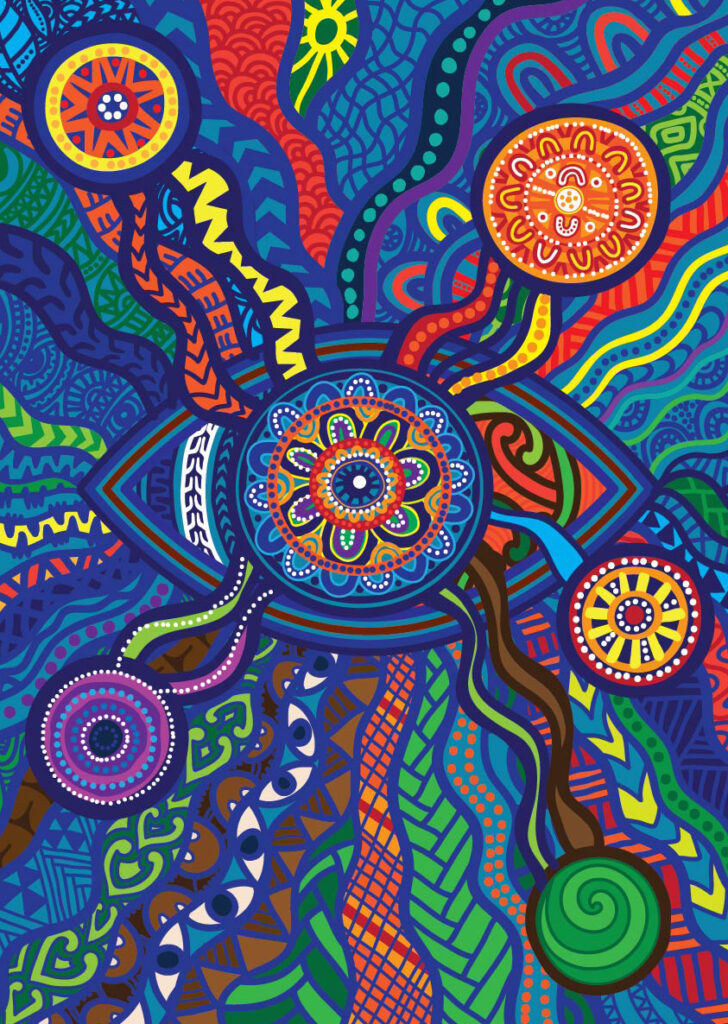
‘Looking at Country – Cultural Connections’
by Riki Salam (Mualgal, Kuku Yalanji, Ngai Tahu)
We are 27 Creative

Māori art design
by Graham Tipene (Ngāti Whātua, Ngāti Kahu, Ngāti Hine, Ngāti Haua, Ngāti Manu)
Te Wheke Moko Design Studio
Our Commitment
We commit to a health system free of racism and discrimination by contributing to the development of a culturally safe optometry workforce. We support equitable access and outcomes to eye care services for Aboriginal, Torres Strait Islander Peoples and Māori, without stigma, racism and fear, and the right to equitable outcomes from care. Our aim is to ensure that optometrists entering the workforce (from university and overseas) are equipped with the knowledge and skills to provide culturally safe care. We further support the equitable representation of Aboriginal, Torres Strait Islander Peoples and Māori in the profession through equitable access / admissions to culturally safe learning, training and employment.
We aim to achieve this by:
- Including the knowledges and perspectives of Aboriginal, Torres Strait Islander Peoples and Māori across OCANZ accreditation and assessment functions.
- Ensuring that our standards for optometry programs require education providers to include learning outcomes for Aboriginal, Torres Strait Islander Peoples and Māori health and develop an entry-level optometry workforce that is cognisant of, sensitive and responsive to the needs and strengths of First Nations peoples.
- Supporting education and training which increases optometrists understanding of their own culture and cultural values and its impact on the delivery of eye care services.
- Supporting education and training to increase Aboriginal, Torres Strait Islander Peoples and Māori participation in the profession to at least population parity.